

Editorial preview: these articles have not yet been published. Texts and author assignments require specialist approval before publication.
1. Describe the product
Record the product's length, width, height and weight. Note sensitive surfaces, protruding parts and the intended position in the packaging. Photos from several angles help explain its geometry. A sample may be useful for complex shapes.
Distinguish product dimensions from packaging dimensions. Space for internal packaging belongs in the planning, but should not be silently added to the product dimensions. State whether each measurement describes the product, usable internal space or finished external dimensions.
2. Consider shipping and storage
Will the product be shipped as an individual parcel or together with other units on a pallet? Will the packaging be stacked, repacked or opened several times? These processes matter as much as the size of the contents.
Describe known loads as specifically as possible. A sensitive edge may need a different solution from a large, robust surface. Packaging should therefore not be selected solely by the number of corrugated layers.
3. Include the packing process
Who does the packing, how much time is available and what equipment is provided? Flat-delivered packaging initially saves space, but must be erected at the packing station. Closure type, product access and the number of components affect the workflow.
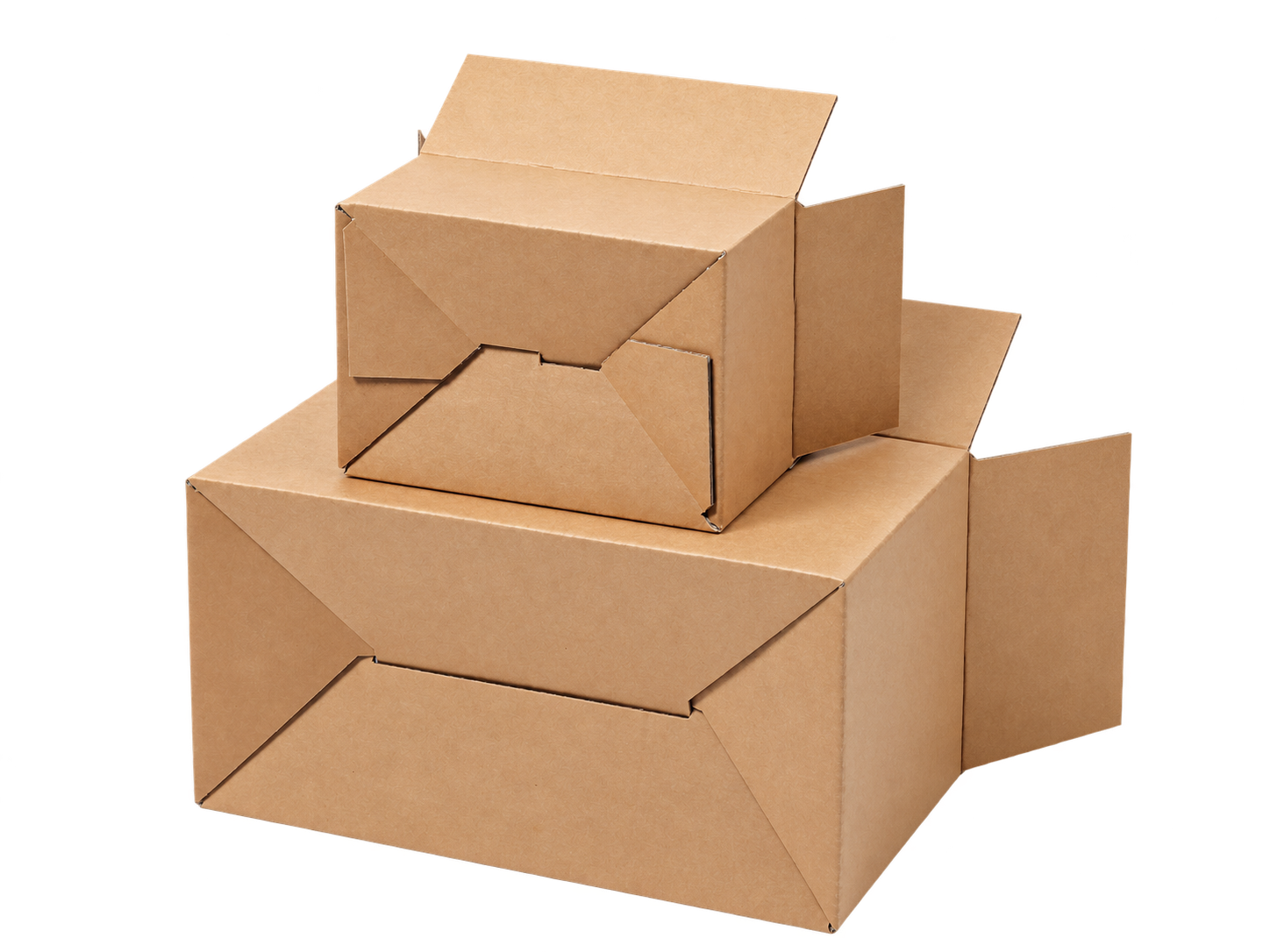
For example, compare a slotted box with a crash-lock bottom box. What matters is not just the design, but how well it fits your particular packing process.
4. State quantity, timing and variants
State the quantity required and distinguish total demand from individual call-offs. Specify whether several product sizes or versions are planned. Include your preferred delivery date; this is not yet a delivery commitment.
- Product dimensions and weight for each variant
- Photos or a product sample
- Shipping method and known storage conditions
- Quantity, call-off quantities and preferred date
- Notes on erection, filling and closing
5. Test a sample in the actual workflow
Before series production, test the solution with the intended product. Check fit, removal, closure and handling at the packing station. Whether further testing is needed depends on the product and transport requirements.
You do not need to know every packaging style at the outset. A clear description is enough for the first discussion. Unfamiliar terms are explained in our Packaging glossary.